Fixed Income Boutique
Based in Zurich and New York, the Fixed Income Boutique is an active manager aiming to capitalize on market trends and inefficiencies.

Over the past years, Swiss franc (CHF) corporate bonds in our view have quietly evolved into what we consider to be one of the most compelling segments of the domestic fixed income market. Once relegated to a niche existence, their market has grown substantially with a greater diversity of issuers of traditionally high credit quality and has become more liquid. At the same time, CHF corporate bonds in our view currently offer attractive carry, while their fundamentals have proven resilient. We believe this combination creates an increasingly compelling opportunity for investors seeking defensive income.
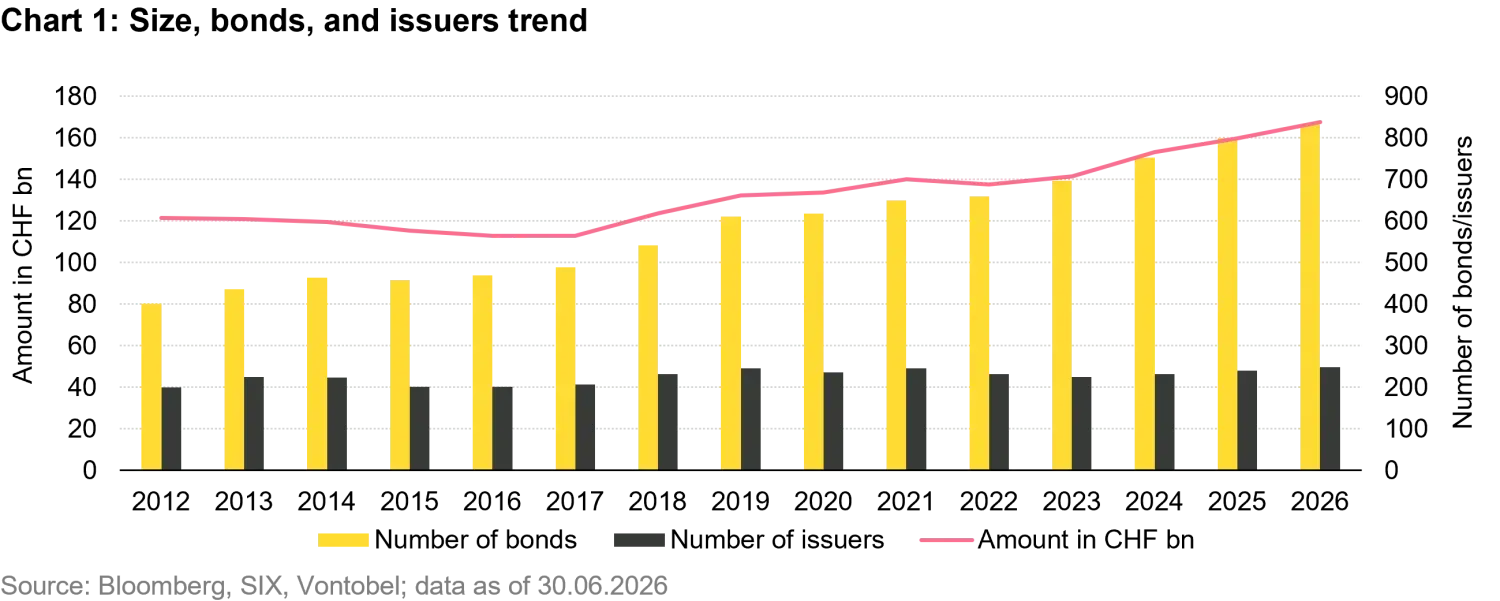
Over the past decade, the CHF corporate bond market has expanded significantly, both in outstanding issuance and in the number of bonds available to investors. The number of issuers has increased as well, albeit at a more moderate pace than the number of outstanding bonds, rising by 24% since 2012 and by 11% over the past three years. Nevertheless, the number of issuers remains broadly in line with levels observed five to seven years ago.
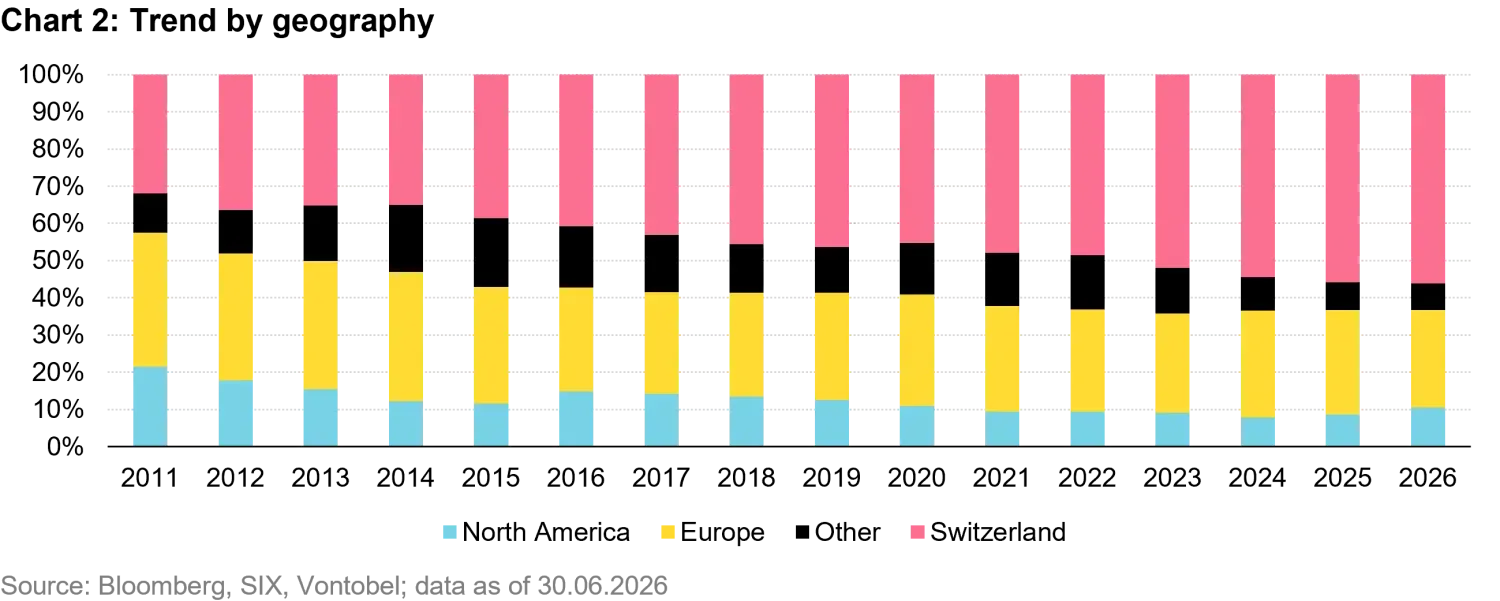
Contrary to common perception that increasing issuance of CHF corporate bonds by foreign borrowers – often through multiple benchmark-sized transactions – would dilute the signature Swiss quality of the market, the share of domestic issuers in fact has risen. Smaller regional borrowers gradually have given way to large Swiss multinationals, improving both diversification and overall credit quality, while also contributing to the higher yield of the overall Swiss franc corporate bond index.
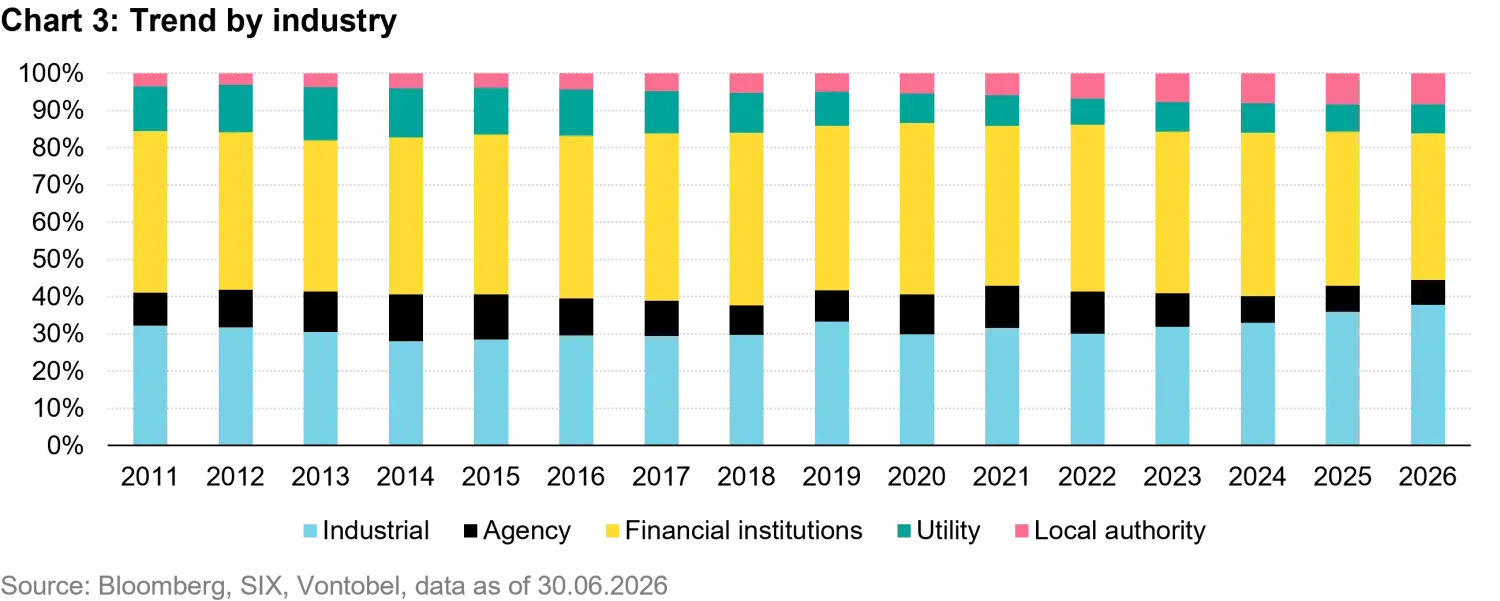
A look at its sector composition reveals a gradual shift over recent years, with the share of industrials increasing versus financials. As a result, the sector composition of the CHF corporate bonds market has become more closely aligned with that of its euro (EUR) and US dollar (USD) counterparts.
Much of the CHF corporate bond market's growth has been concentrated among issuers rated AA and A, reinforcing its long-standing bias toward high credit quality.
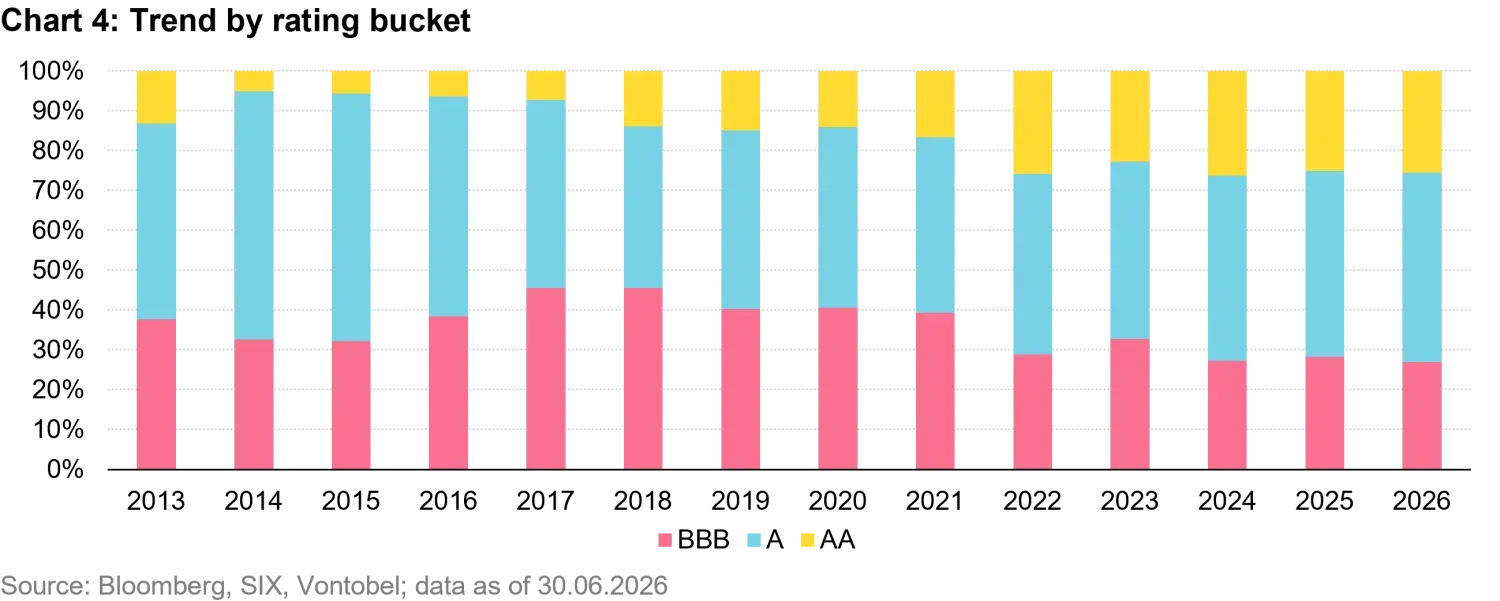
Looking ahead, we think further growth of the CHF corporate bond market may increasingly stem from issuers with a BBB rating, given the initial issuer volume required for a bond to be included in the index is only CHF 100 million, hence affordable for smaller corporates. While such development would imply a modest shift toward lower average credit quality, it would also expand the investment universe and could provide investment platforms that have the local and international expertise in CHF corporate bonds with additional opportunities for active credit selection.
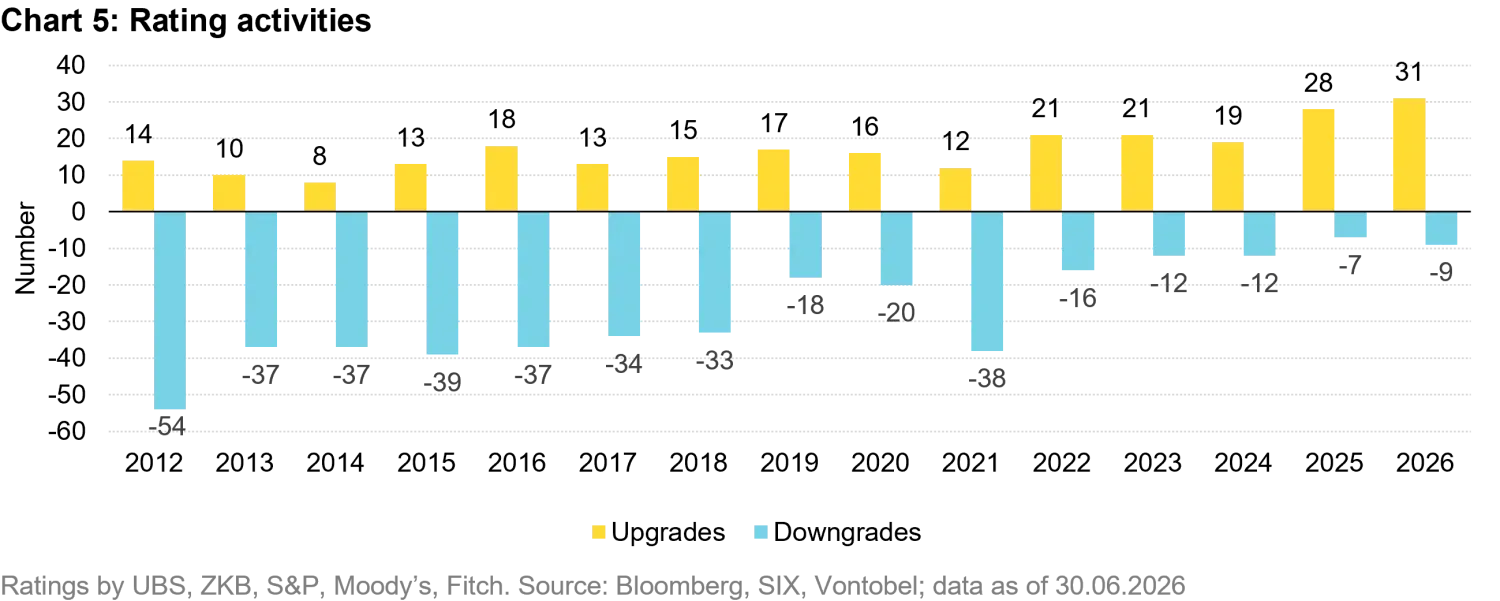
We are convinced that credit quality remains the defining strength of the CHF corporate bond market. The fact that defaults by the underlying issuers have been rare so far demonstrates both their financial strength and the typically conservative nature of their investor base. Since 2000, defaults have been limited to just a handful of names. In our view, the rating adjustments also support the high quality of the CHF corporate bond market, with upgrades tending to occur more frequently than downgrades in recent years, highlighting the market’s sound financial health today.
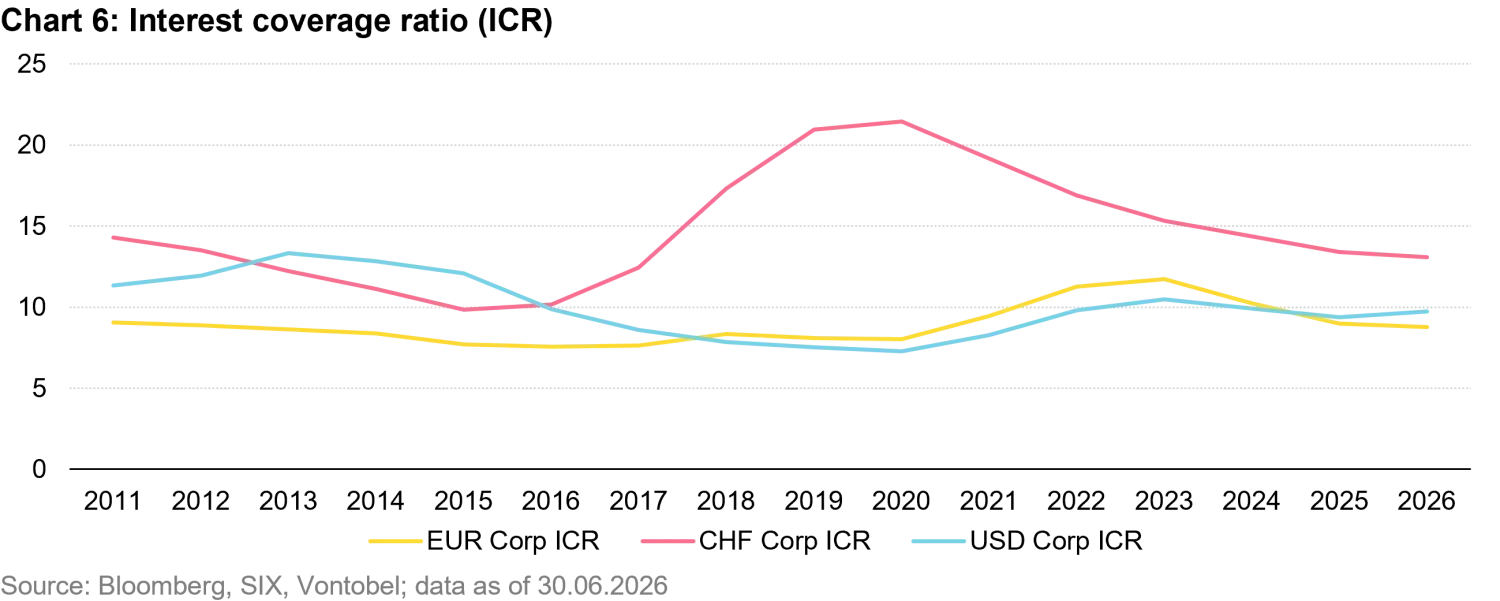
A comparison of the CHF corporate bond market with its counterparts shows consistently robust fundamental credit metrics. Interest coverage ratios (ICR) – a measure of how easily a company can pay the interest on its outstanding debt – are at very high levels and compare favorably with both the markets of investment-grade bonds denominated in EUR or USD.
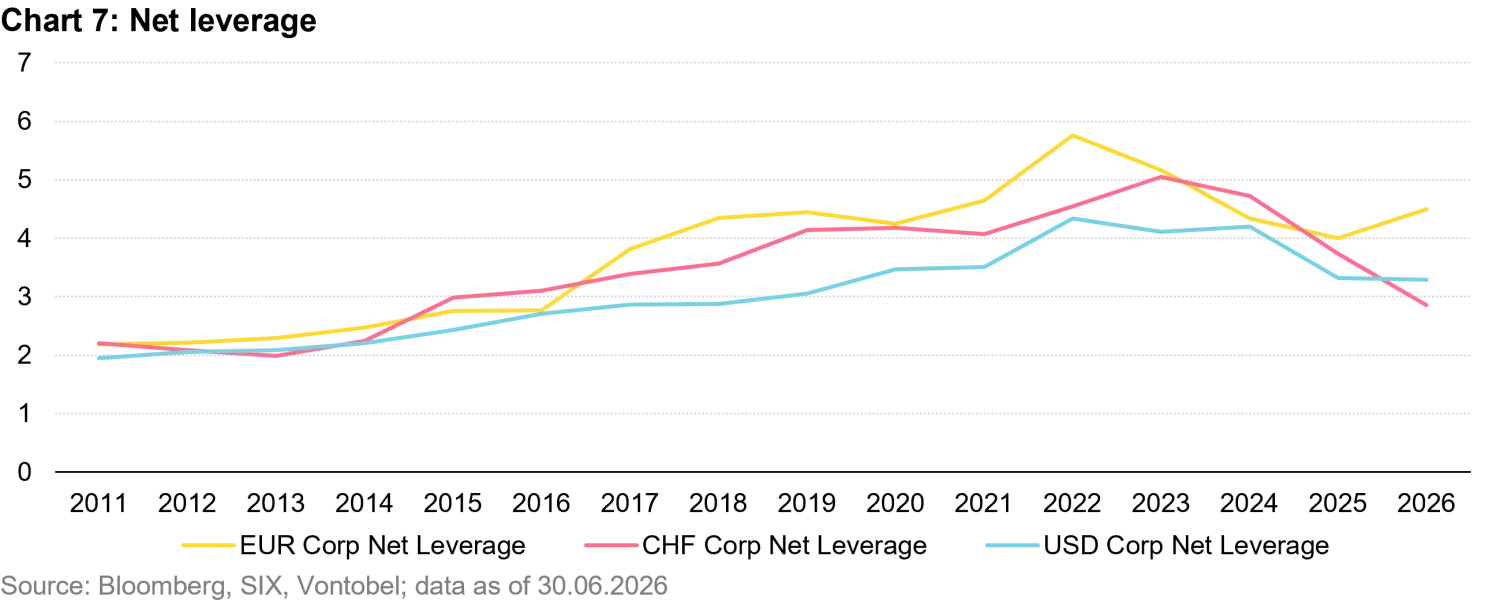
Corporates’ net leverage figures – which help us to gauge how heavily a company has borrowed relative to its cash generation – require some context. Historically, the CHF corporate bond market included a relatively high share of Swiss utilities/partner plants and hospitals – sectors that naturally operate with higher debt levels due to their business models. As issuance by highly rated multinational corporates has increased, overall leverage has declined steadily, strengthening the market's aggregate credit profile.
Historically, the primary advantages of the international corporate bond markets over the CHF one were their greater size, broader issuer base, and higher degree of diversification. This is still true, but, as the CHF corporate bond market has expanded, the gap has narrowed. Today, investors can access a significantly larger and more diverse set of CHF corporate bonds and their issuers than a decade ago, while still benefiting from the market’s traditionally strong credit quality and stability. In addition, spread behavior in the CHF market has often proven more resilient during periods of volatility, reflecting the defensive characteristics of both its investor base and issuer universe.
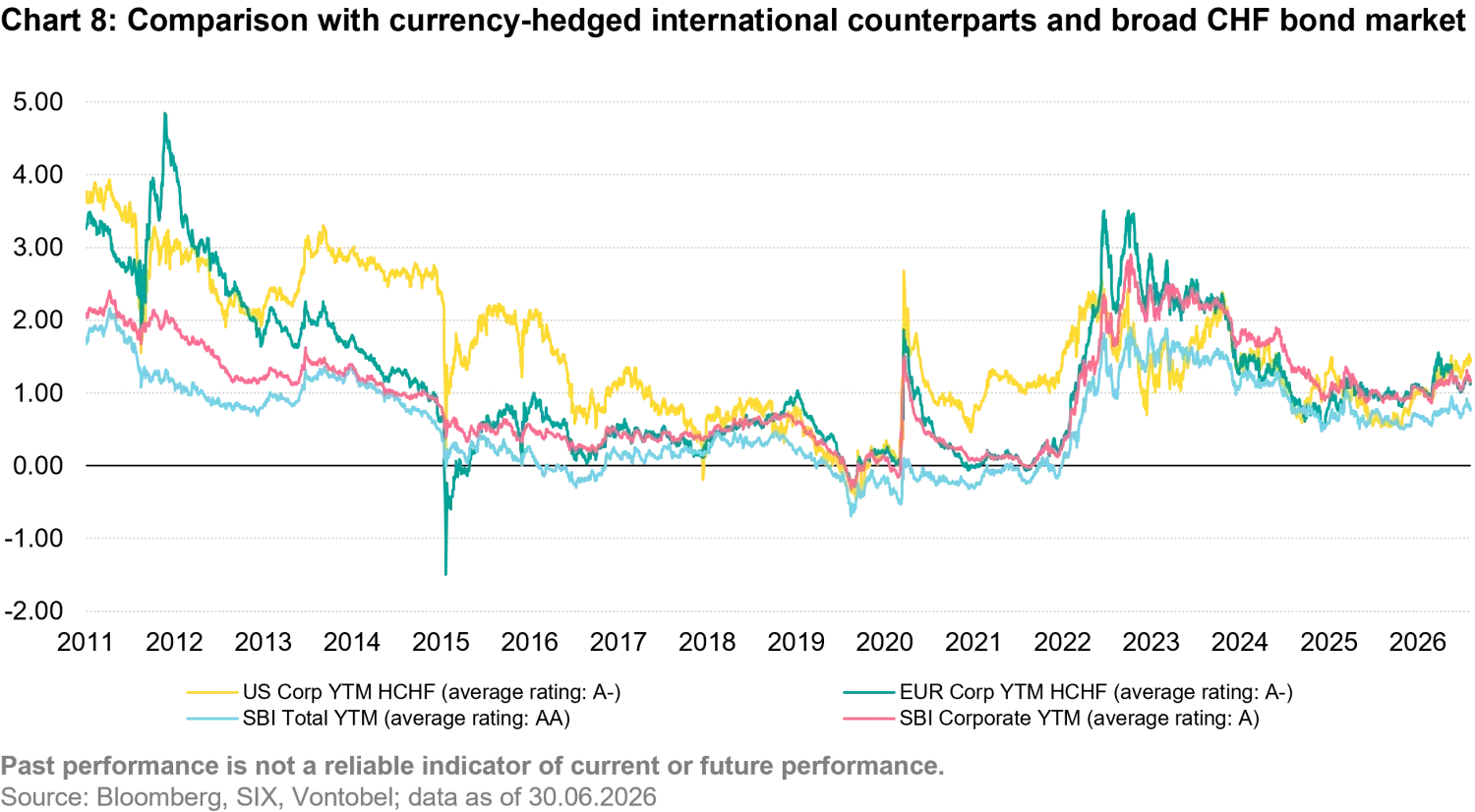
Let’s now compare the CHF corporate bond market with currency-hedged international corporate bond indices. Our analysis shows that, considering hedging costs, the yield advantage of EUR and USD corporate bonds has narrowed considerably, while CHF corporate bonds continue to offer superior credit quality and defensive characteristics. Indeed, the average rating of the CHF corporate bond index is A, while those of the US and EUR counterparts are slightly lower, sitting on the borderline between BBB+ and A-, depending on the rating convention and date. Over time, we believe the CHF corporate bond market has gained in attractiveness. Historically, it offered lower yields and total return potential than its EUR and USD counterparts but gradually closed this gap and from our standpoint now provides a competitive value proposition relative to other major corporate bond markets – also considering the much longer duration of the US peer index. Compared to the broader CHF investment grade bond market, it has significantly increased its yield premium and carry advantages in our view, thus enhancing its attractiveness for investors in search of additional income while remaining within the CHF universe. Compared to international investment-grade bond markets, we think CHF corporate bonds continue to stand out with their stronger credit fundamentals and historically more resilient spread behavior during periods of market stress.
Regardless of its growth, the CHF corporate bond market continues to exhibit structural inefficiencies that in our view create compelling opportunities for active asset managers. Several factors contribute to periodic mispricing of individual bonds. Market liquidity remains lower than in larger global corporate bond markets, leading to wider bid-ask spreads and occasional valuation dislocations. In addition, a meaningful share (about 30%) of the CHF corporate bond market consists of local unrated issuers that receive limited coverage from international investors and research providers. As a result, security prices do not always fully reflect underlying fundamentals. For investors with strong research capabilities and local market expertise, these inefficiencies can be a significant source of alpha generation. As active managers we strive to identify these to exploit attractive opportunities, which investors in the broader market may overlook.
CHF corporate bonds have evolved from a niche allocation into a more mature and increasingly attractive segment of the global investment-grade corporate bond universe. From our standpoint, the combination of increasing market depth, consistently high credit quality, defensive characteristics, solid fundamentals, carry advantages, and spread resilience in stressed markets positions the asset class particularly well in today's environment. This enhances their attractiveness for investors seeking stable income while maintaining a high-quality credit profile. Moreover, we believe the market's remaining inefficiencies still offer meaningful investment opportunities. We aim to seize them by active management to generate alpha for our clients.