The 30-day realized volatility in the high-yield bond market has collapsed following the spike we saw in March–April this year. A better-than-expected earnings season, still-resilient consumer spending, defensive aggregate fund positioning, and steady inflows have driven a sharp tightening in high-yield spreads since April, alongside a collapse in spread volatility. Meanwhile, long-dated rates volatility has remained elevated throughout the year.
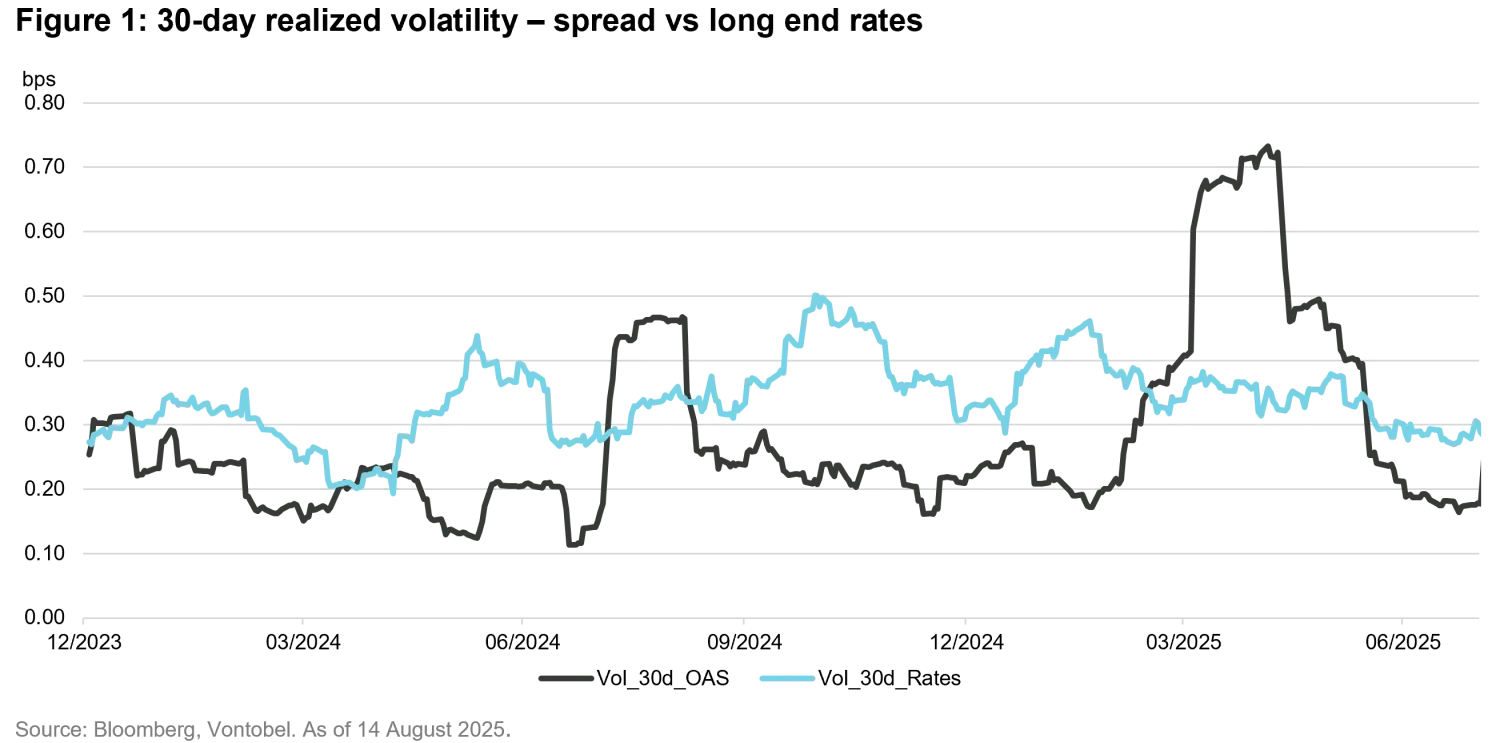
With spreads tight in a historical context but yields still attractive from a carry perspective, we remain mindful of the risk that spread volatility could resurface in the coming months. At the same time, the new issue market in developed-market high-yield has been buoyant, with companies proactively addressing 2026–2028 maturities through tenders and calls, with some even extending into 2029. Proceeds have primarily been used for refinancing, providing both fundamental and technical support to the market. The call and tender premium have also led to notable outperformance at the front end of the maturity spectrum.
Consider, for example, a pet specialty retailer in the single-B/CCC segment of the high-yield market. The sector benefits from long-term structural tailwinds tied to demographic and lifestyle shifts. Despite its attractive business profile and free cash flow generation, the company is backed by an aggressive private equity sponsor with a history of re-leveraging the balance sheet through dividend recapitalizations — a source of past bond price volatility. Recently, the company refinanced its entire capital structure, calling its 2028 secured bonds at 101.2 and its 2029 unsecured bonds at 101.9. Prior to the call, these bonds traded at 98.2 and 97.5, respectively, as the market had not priced in the call premium given the non-imminent maturity dates. The refinancing and premium calls drove a notable repricing higher.
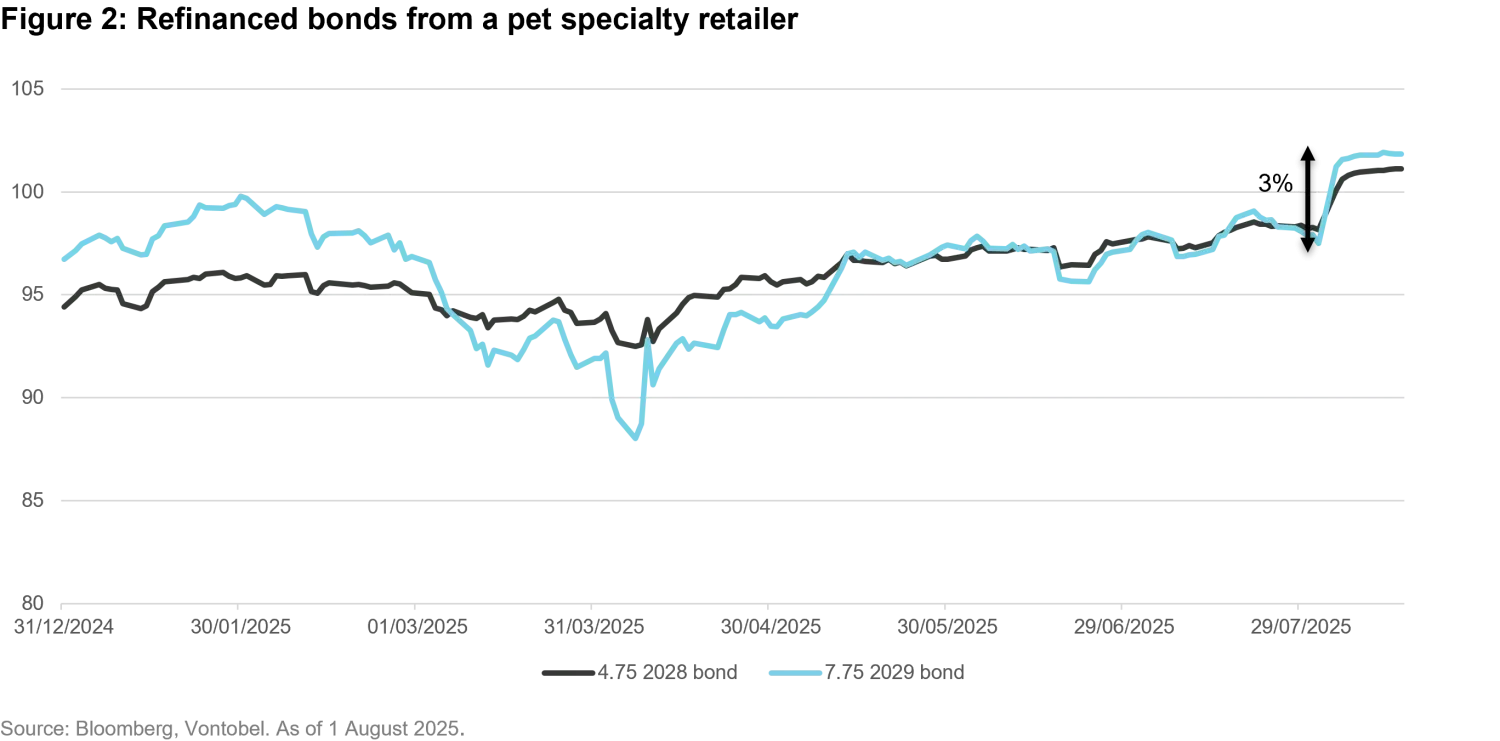
In recent months, we have observed several issuers in a similar risk cohort proactively addressing their maturity walls, driving outperformance at the front end of the curve. While the call premium represents a cost, issuers have increasingly accepted this trade-off to lock in long-dated funding, manage their maturity profiles, and reduce short-term refinancing risk.
With credit spreads tight and the likelihood of spread volatility returning, we prefer not to extend spread duration in generic, tight-spread credits. Default rates are expected to remain low over the next 12 months, supported by a benign maturity profile and a wave of proactive refinancing extending well beyond 2026. However, given the elevated volatility in long-end rates, we favor short-dated high-yield bonds (2027–2028 maturities) that trade below par and could be refinanced at a premium through tender or call.
We view these bonds as a compelling, low-volatility opportunity: They combine attractive carry with the potential for capital appreciation if called or tendered at a premium, while also offering resilience should broader market volatility resurface. From a portfolio construction perspective, we may also consider hedging instruments such as CDS options/indices.