Quality Growth
Global equities specialists since 1984. We provide a boutique investment experience for institutional and intermediary clients around the world.

As the great investor Sir John Templeton once observed, “If you want to have a better performance than the crowd, you must do things differently from the crowd.”
That simple idea lies at the heart of active management. Yet many investors evaluate active managers through tracking error, a statistical measure of how much a portfolio’s returns differ from its benchmark.
Picture two runners on a track. One represents the benchmark (say, the S&P 500) and runs at a steady pace. The other represents an active manager. If the manager stays shoulder-to-shoulder to the benchmark throughout the race, tracking error remains low. If the manager occasionally sprints ahead or falls behind, tracking error increases. This is the case even if both runners cross the finish line at the same time.
Generally speaking, without tracking error, an active manager will just tie the race. By definition, a portfolio that perfectly tracks its benchmark will simply match its returns before fees. The question, then, is whether tracking error is being rewarded.
This is where the information ratio (IR) becomes useful. The IR measures the excess return a portfolio generates relative to the benchmark for each extra unit of tracking error assumed.
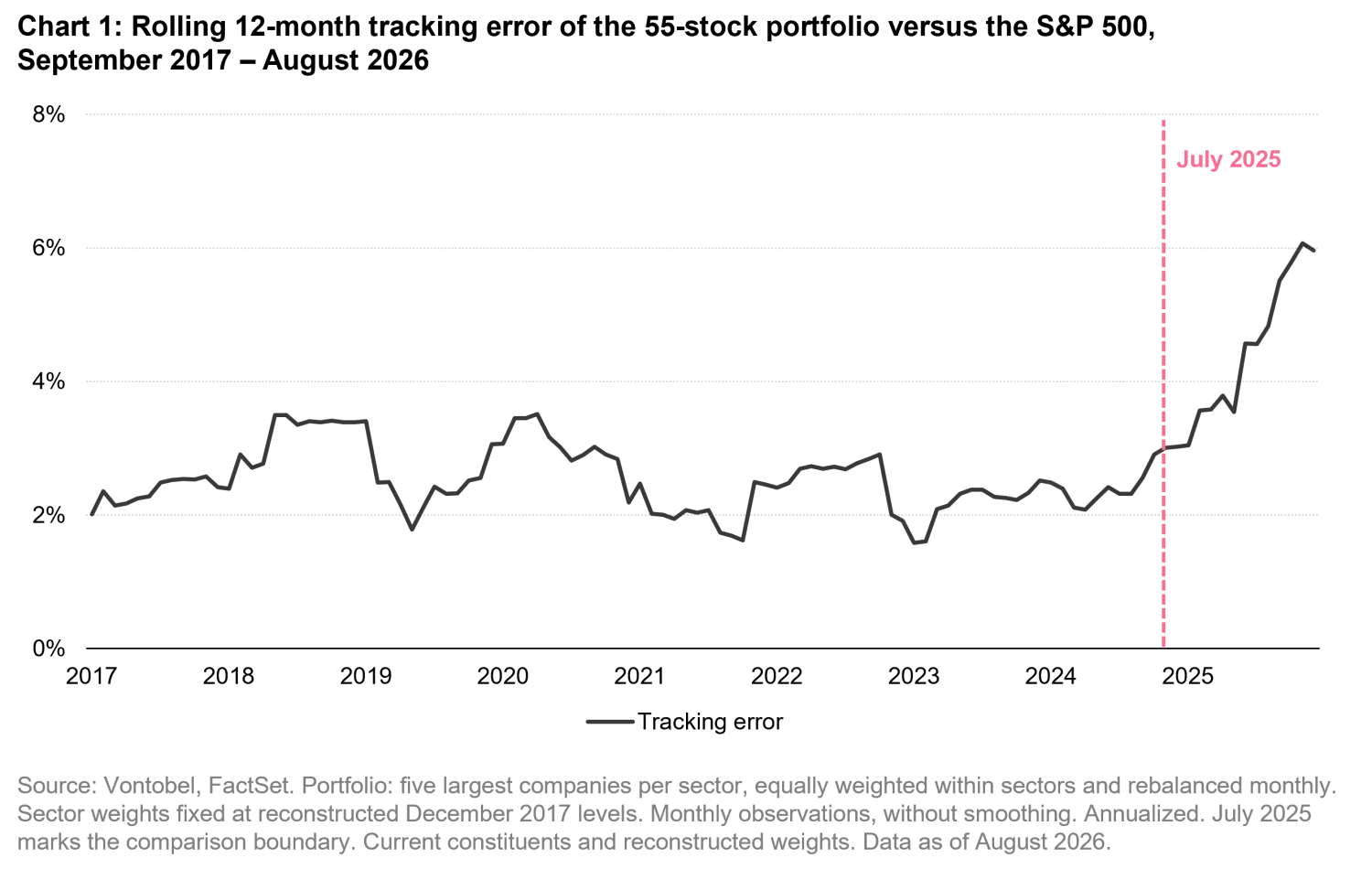
Tracking error for a hypothetical portfolio consisting of the five largest companies in each of the 11 sectors in the S&P remained stable over the past decade. However, beginning in mid-2025, it rose sharply. A similar pattern emerged across most actively managed concentrated portfolios. This raises another question: Does higher tracking error mean active management has become more risky?
In our view, not necessarily. To understand why, it helps to break tracking error into its key components: portfolio volatility and correlation with the benchmark.
Portfolio volatility measures the degree to which portfolio returns fluctuate over time. For example, a portfolio with 13% volatility and an 8% median return would typically generate returns within a range between -5% and 21% in a given year.
Correlation with the benchmark measures how closely a portfolio’s returns move with the broader market. Correlation ranges from -1 to 1. A correlation of +1 indicates that the portfolio moves in step with its benchmark, while a correlation of -1indicates that it moves in the opposite direction, and 0 suggests there is no relationship.
Tracking error generally increases when portfolio volatility rises or when correlation with the benchmark falls.
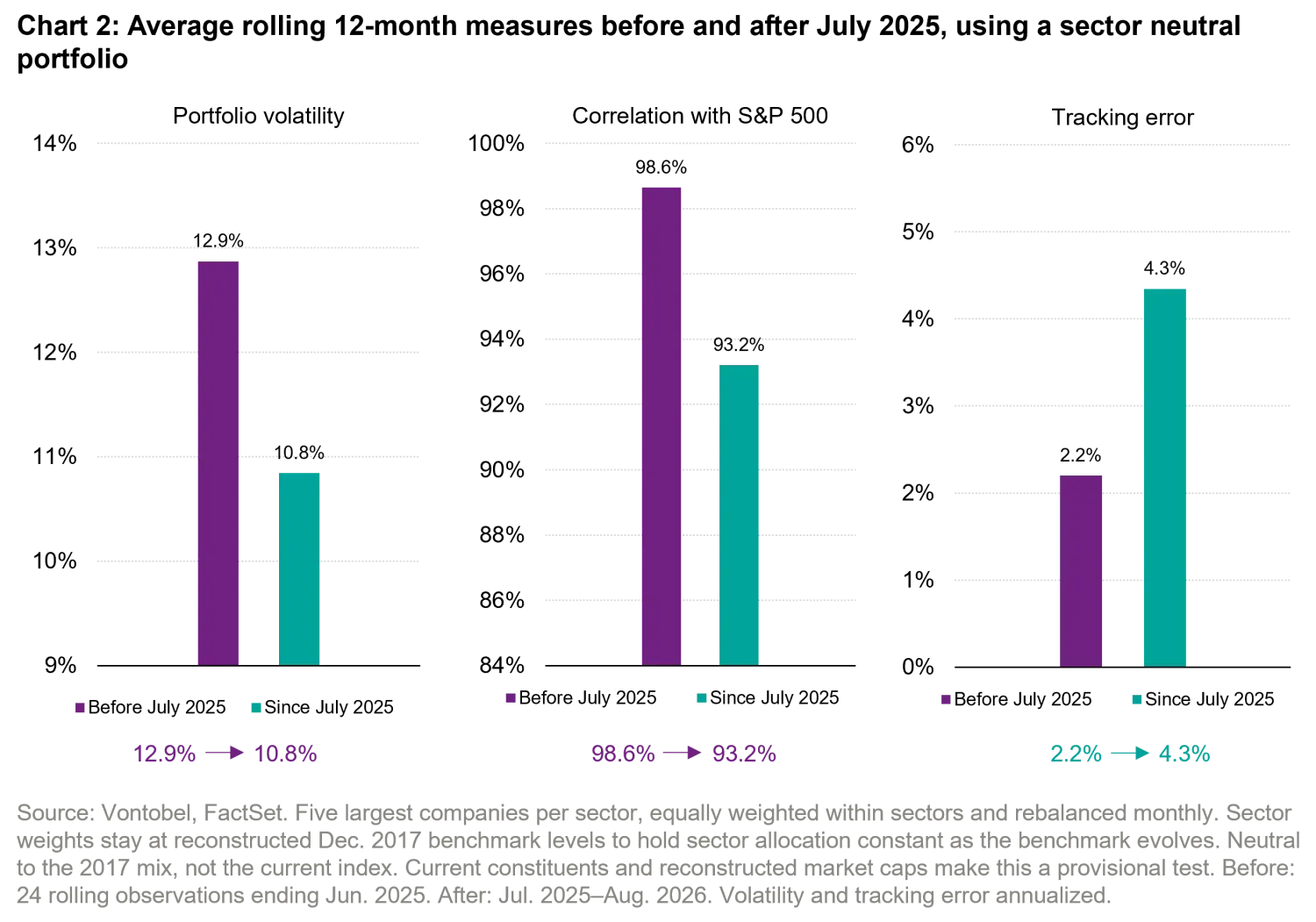
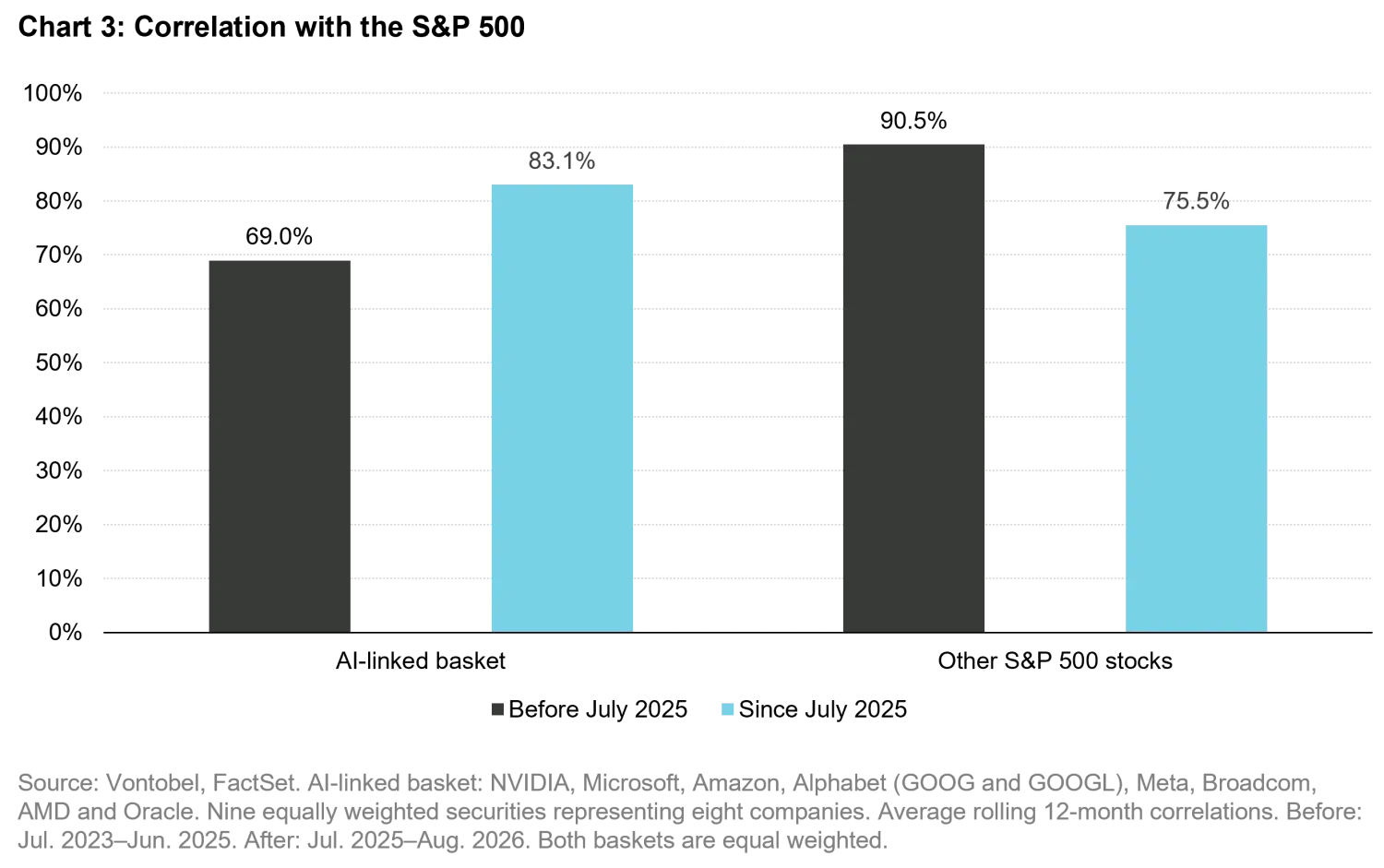
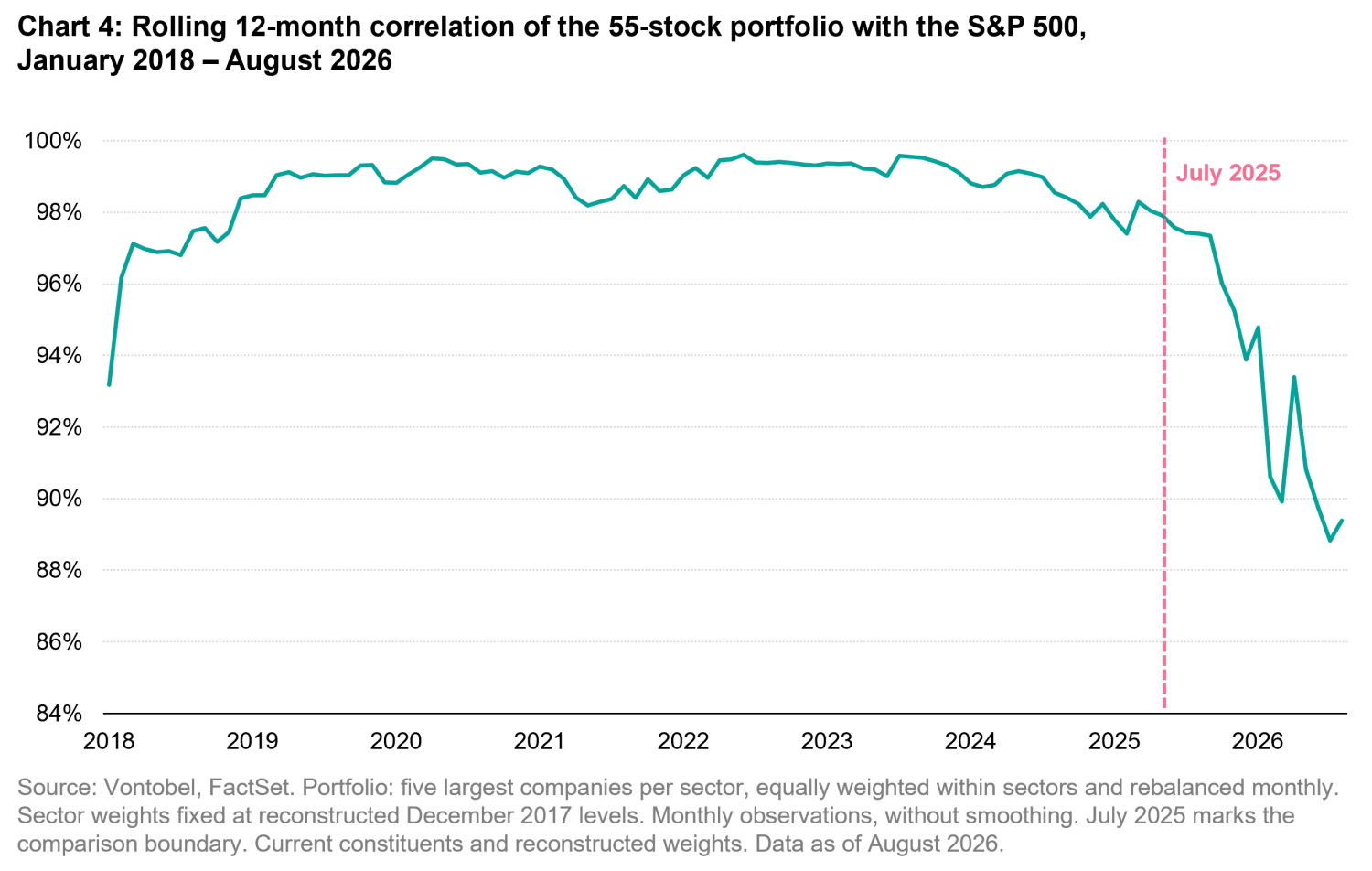
Since mid-2025, while volatility of our hypothetical portfolio declined, correlation with the benchmark also declined and tracking error nearly doubled (Chart 2). One potential explanation is that benchmark returns have become increasingly correlated to AI-related stocks, making the index less representative of the broader market (Chart 3).
In our recent article, Quality is dead. Long live quality, we show that the number of non-AI related stocks outperforming the market declined from 80% from June 2017- June 2025 to just 25% thereafter.
As a result, diversified portfolios with lower volatility have experienced reduced benchmark correlation as market leadership has become increasingly concentrated in a narrow group of AI-related companies (Chart 4).
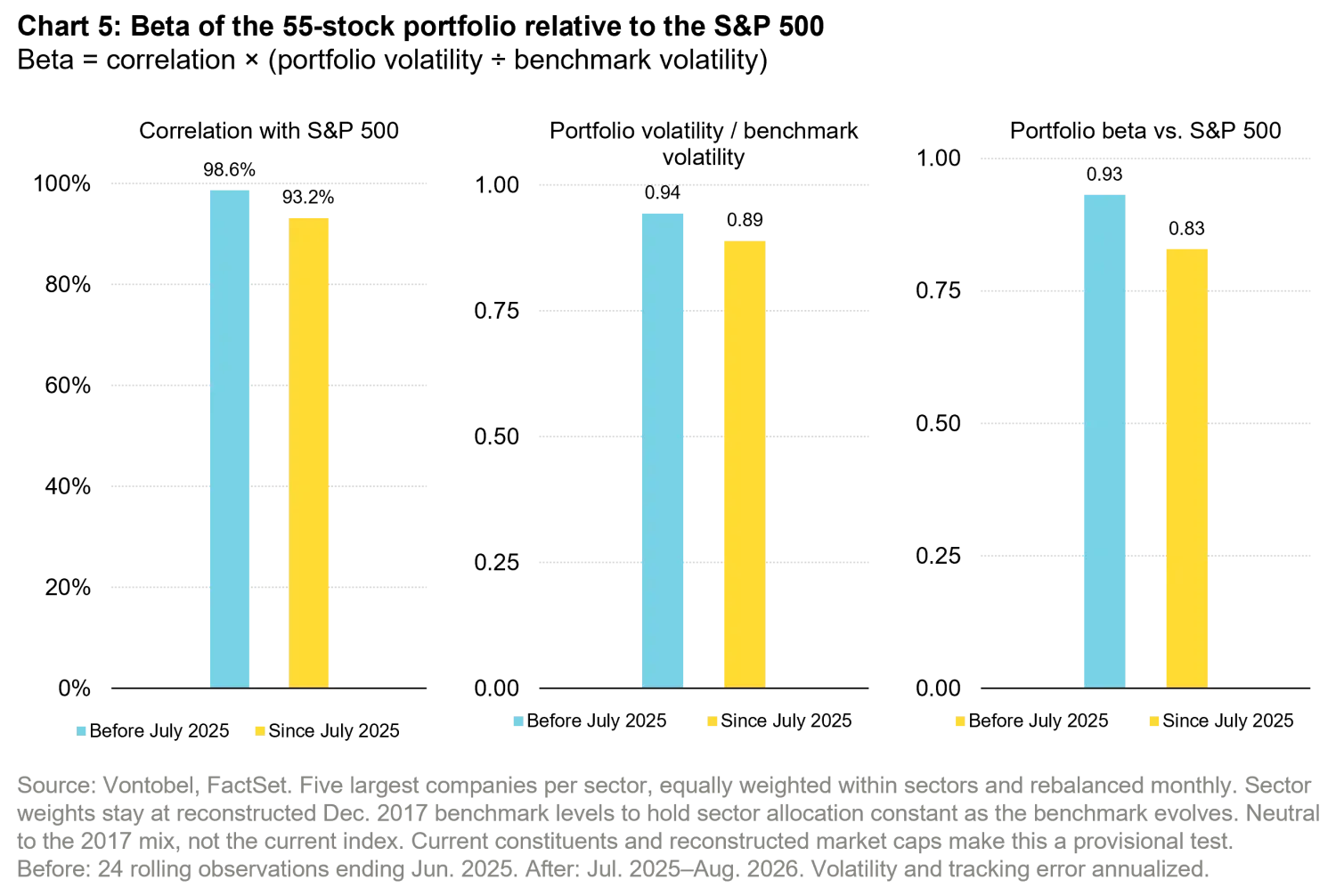
Ironically, despite the increase in tracking error, beta, another widely used measure of risk, has actually declined. Beta measures a portfolio’s sensitivity to broader market movements. Historically, a beta lower than 1 indicates that the portfolio typically participates less in a rising market and declines less in a falling market. This decline in beta reflects the fact that both correlation and volatility have declined since mid-2025.
In other words, while tracking error has increased, the overall risk profile of a diversified, high conviction portfolio has not necessarily risen. Rather, in our view, the benchmark has become increasingly correlated with one theme: AI related stocks.
While it may seem counterintuitive, in today’s markets, running with the crowd may not be the safest way to go.