
24/7 power: The future runs on storage
Conviction Equities Boutique
Key takeaways
- What began as a gradual transition toward cleaner energy has evolved into a structural reconfiguration of how power is generated, transmitted, and consumed.
- Storage systems move electricity from periods of surplus generation to periods of higher demand, which makes renewable generation more predictable.
- As power systems become more electrified, decentralized, and more digital, we believe renewables-plus-storage will likely become the backbone of the future energy system.
The global energy system is undergoing a profound transformation. What began as a gradual transition toward cleaner energy has evolved into a structural reconfiguration of how power is generated, transmitted, and consumed. We believe the combination of renewable generation and energy storage is poised to transform global power markets.
Batteries have been in use for over 200 years, but growth has accelerated more recently
Although batteries have been around for more than two centuries, their importance within modern energy systems has increased significantly. Utility-scale solar-plus-storage projects can usually be completed within two to three years, much faster than new gas-fired power plants, which often face lengthy procurement processes and regulatory approvals. This shorter development timeline is particularly valuable in markets with an urgent need for additional generation capacity. Turnkey system1 costs are much lower than they were just a few years ago and are expected to continue declining. Combined with technological innovation and economies of scale, lower costs have made energy storage systems (ESS) commercially viable (see chart 1).
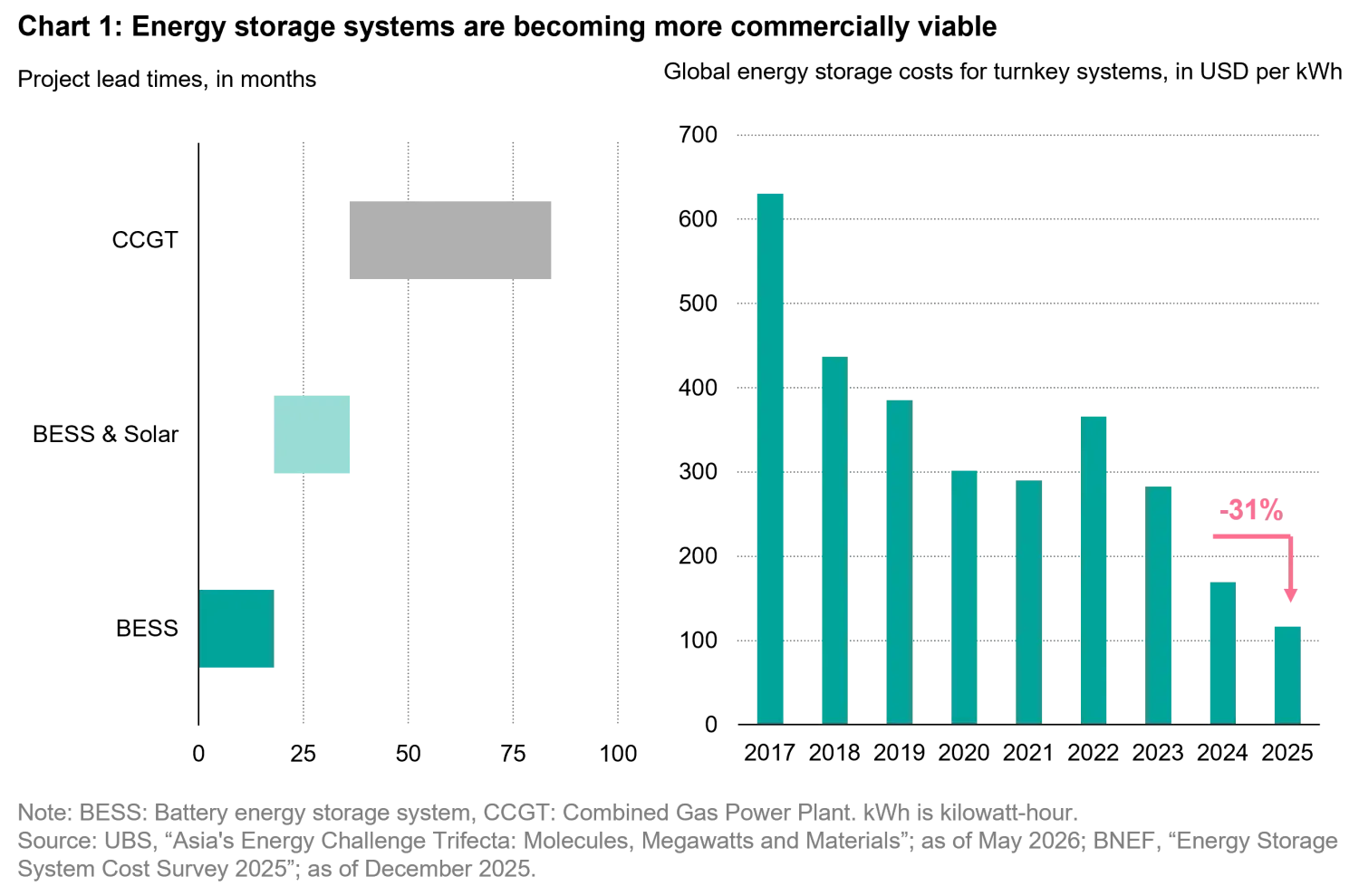
Utility-scale battery projects are now able to generate returns that make them financially attractive to investors. Their economics are supported by widening intraday electricity price spreads and a broader mix of revenue streams. These include not only traditional power purchase agreements but also arbitrage, grid support services (ancillary services), and capacity markets.
Making renewable power more reliable
Renewable energy has one well-known limitation: electricity generation depends on weather conditions and time of day. Battery storage is increasingly addressing this challenge by making renewable electricity available when it’s needed instead of just when it’s generated. This means that renewable power can more widely be dispatched on demand and, in some cases, provide electricity that approaches baseload2 supply.
Storage systems move electricity from periods of surplus generation to periods of higher demand, which helps stabilize grids and provide backup capacity when needed. This in turn makes renewable generation more predictable and increases its value within the power system. In several markets, solar-plus-storage systems can already meet a substantial share of continuous electricity demand at costs that are competitive with gas-fired power plants.
Co-locating storage with renewables amplifies these benefits by improving efficiency (e.g., shared grid infrastructure and engineering, procurement and construction savings) and unlocking additional revenue streams through arbitrage, grid services, or capacity payments, which can make projects more bankable and attractive to lenders.
Case study: Data centers powered by solar-plus-storage systems
Data centers provide a great example of why reliable renewable energy is becoming more important (see chart 2). Their power demand is growing fast, and uninterrupted power supply is essential for their operation.
According to BloombergNEF (BNEF), solar-plus-storage systems can already supply around 70 percent of the baseload electricity required by data centers in several markets at costs that are competitive with combined-cycle gas turbines. This is a significant threshold because data centers depend on a continuous and high-quality electricity supply.
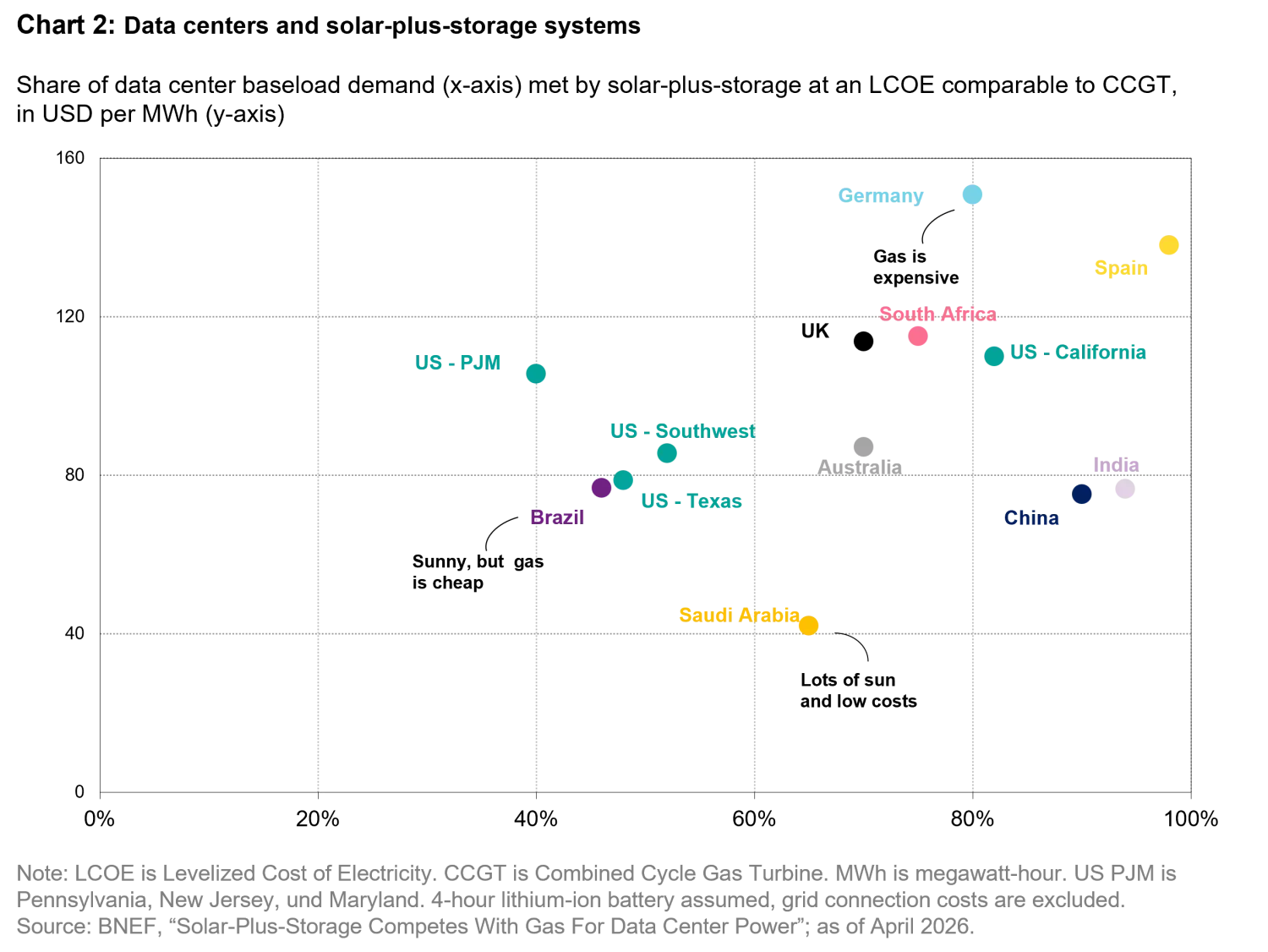
The economics are especially attractive in regions with abundant solar resources or high gas prices, such as Spain, India, and parts of the Middle East. In Spain, for example, solar-plus-storage can supply a large share of baseload demand at a levelized cost that is significantly lower than gas-fired generation.
From a system perspective, storage allows solar generation to match demand patterns, turning daytime generation into dispatchable supply for evening peaks or continuous consumption. This flexibility is particularly valuable for data centers, where even short interruptions or fluctuations in power supply can result in material economic costs.
However, the case also illustrates current constraints. Achieving higher levels of baseload coverage typically requires oversizing3 both solar generation and storage capacity, which increases land use and upfront capital requirements, especially in less sunny regions.
Nonetheless, the direction of travel seems clear: Solar-plus-storage is quickly becoming a viable alternative to gas for powering next-generation digital infrastructure, and a key lever in decarbonizing one of the fastest-growing sources of electricity demand.
Energy security and the role of storage
Recent geopolitical developments have drawn attention to the importance of energy independence.4 Countries that depend heavily on imported fossil fuels are exposed to supply disruptions and volatile energy prices. Renewables paired with storage take a different approach. Once these systems are installed, they generate electricity primarily from domestic resources and require little ongoing fuel input, which reduces exposure to global commodity markets and can strengthen long-term energy security. Periods of higher fossil fuel prices also strengthen the case for renewable generation paired with storage.
Alongside intermittency, one of the most pressing challenges facing the energy transition is grid capacity.5 In many regions, aging infrastructure and growing congestion6 are limiting the integration of new renewable projects. Battery storage can help address these challenges by acting as a flexible, distributed grid asset. It can absorb excess electricity, inject power during peak demand, and effectively function as a “virtual transmission line,” helping to alleviate congestion. This allows system operators to make better use of existing infrastructure while reducing the need for costly and time-consuming grid expansions. Storage can also reduce renewable curtailment and extend the lifespan of grid assets. In markets where grid access is becoming a bottleneck, storage is likely to become increasingly essential to unlocking new capacity.
Scaling growth meets supply-chain reality
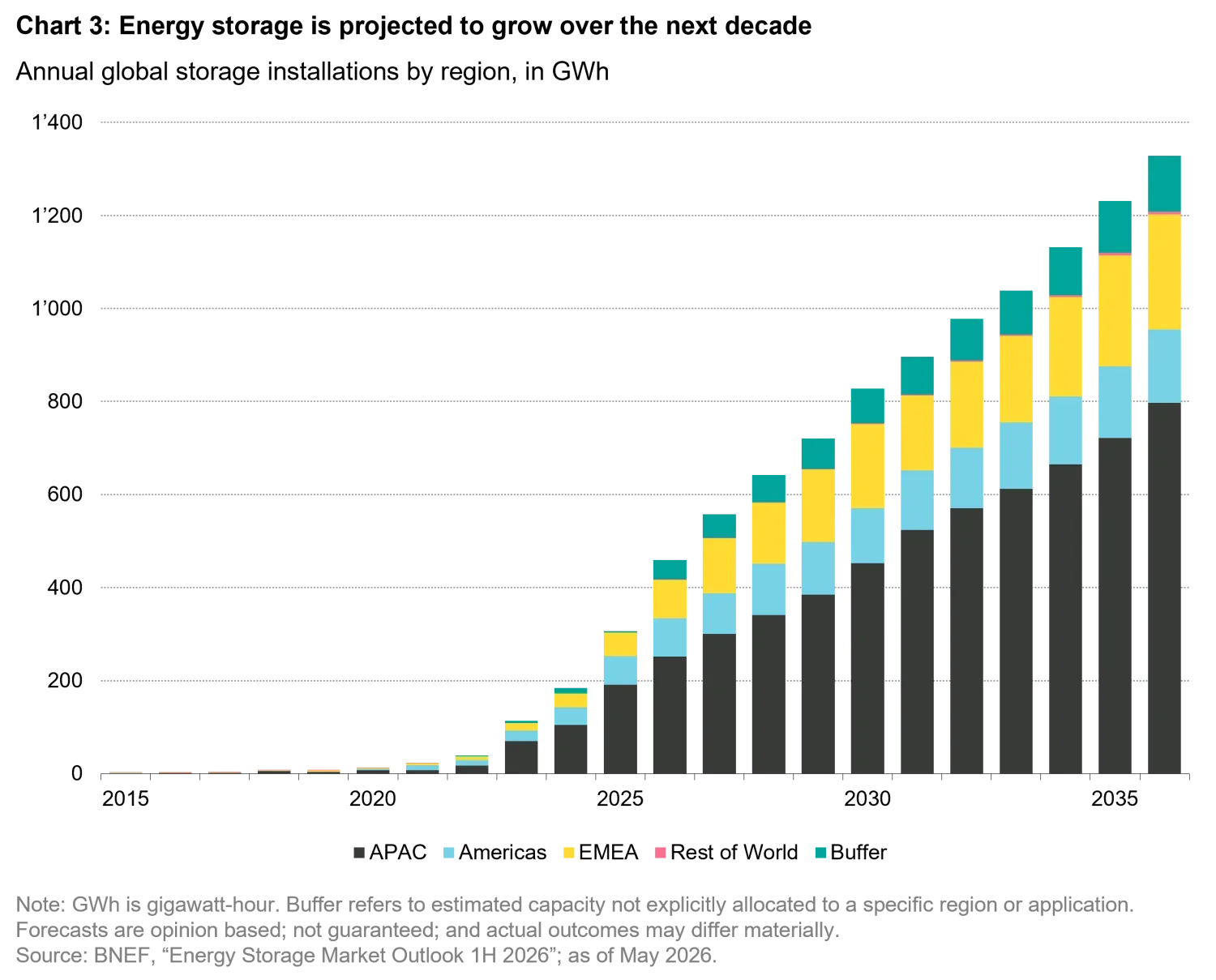
The outlook for energy storage remains compelling (see chart 3), but it is accompanied by challenges, especially within the battery supply chain. Battery production spans a wide range of sectors, including mining, chemicals, semiconductors, and equipment.
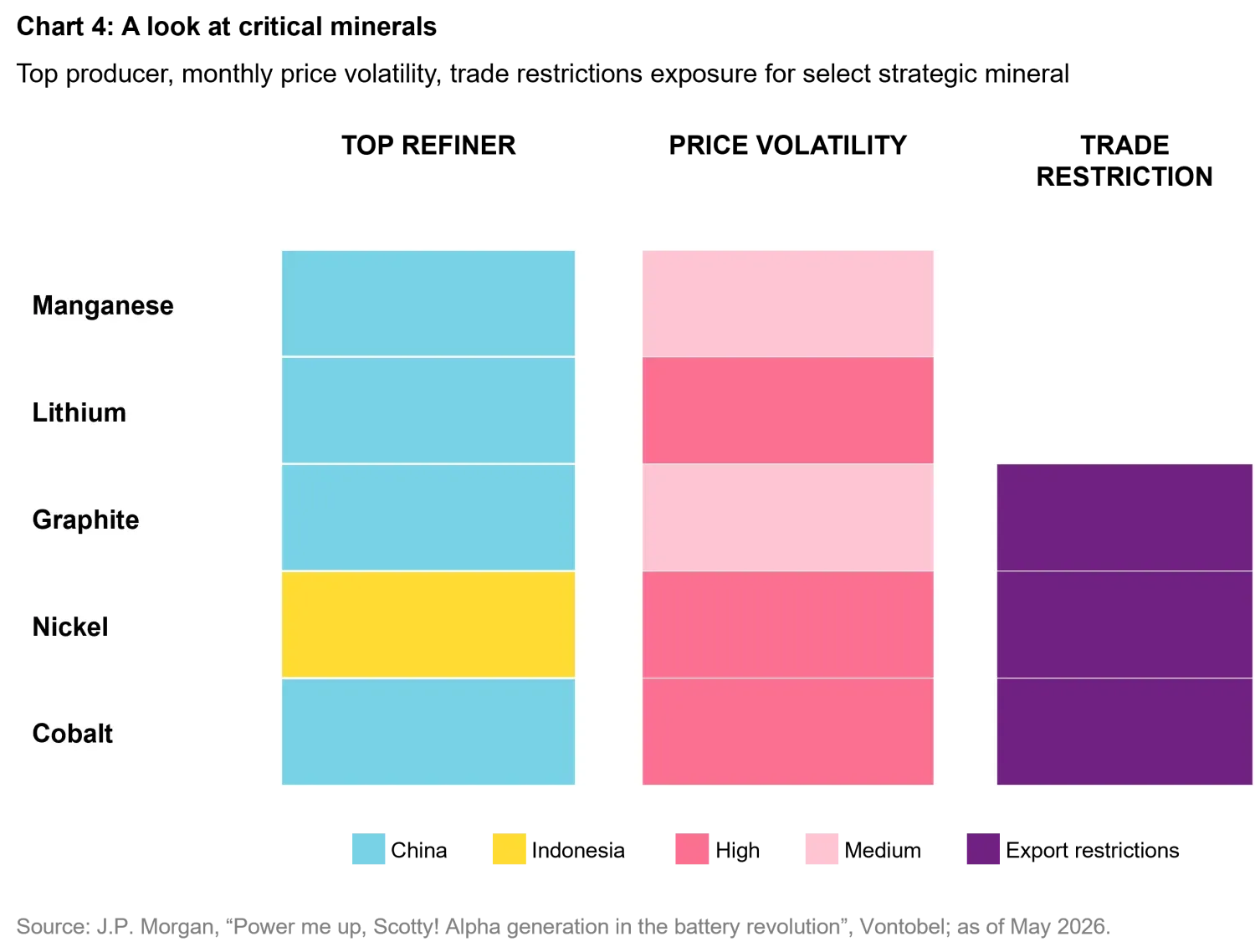
Critical minerals such as lithium, nickel, and cobalt account for more than half of battery production costs, and their prices can fluctuate a lot – often more than oil prices. Also, refining and processing are highly concentrated, with China a leader in the production of key battery materials and cell components. This creates both economic and geopolitical risks, especially as global demand for batteries is on the rise. However, significant efforts are underway to diversify supply chains, localize production, and develop alternative chemistries such as sodium-ion batteries, which rely on more abundant materials.
Battery recycling is another important part of strengthening the supply chain. Recovering key materials from used batteries and manufacturing scrap can reduce dependence on primary raw materials and improve supply security. Over time, recycled materials are expected to meet a growing share of demand. This transition effectively introduces circularity into the battery value chain, transforming a resource-intensive process into a more sustainable system. For now, however, recycling remains at an early stage. Most batteries are still in service, which limits the amount of material available for recycling, and some processes remain technically challenging, particularly when it comes to extracting certain materials efficiently. Even so, advances in recycling technology and higher processing volumes are expected to improve supply resilience, support more stable costs, and reduce the environmental impact of battery production over time.
Opportunities span across the value chain
The transition toward renewable power combined with energy storage creates attractive investment opportunities across the entire value chain, in our view. Upstream, companies involved in the extraction, processing and refining of critical minerals such as lithium, copper, nickel and rare earth elements are likely positioned to benefit from growing demand for electrification. Midstream and downstream opportunities include manufacturers of battery production equipment, battery cells, solar modules, inverters, and power electronics, as well as suppliers of grid infrastructure and transmission equipment. Utilities and renewable power developers that integrate storage solutions may also benefit as electricity systems become more flexible and reliable. Together, these industries provide investors with diversified exposure to the structural growth of a more electrified, secure, and low-carbon energy system.
A new backbone for energy systems
The combination of renewables and storage is changing the way electricity systems operate. What initially served as a way to manage the intermittency of renewable energy is now contributing to a broader range of objectives, including decarbonization, grid stability, and energy security. As power systems become more electrified, decentralized, and more digital, we believe the role of renewables-plus-storage is likely to become not just part of the energy transition, but a backbone of the future energy system.
1. A turnkey system is a solution that is delivered fully built, integrated, and ready to operate, so the buyer can simply “turn the key” and start using it.
2. Baseload refers to the continuous level of electricity needed to meet demand around the clock.
3. Building more solar panels and storage capacity than is needed to meet average electricity demand so the system can continue to supply power when solar generation is low, like at night or on cloudy days.
4. See article https://am.vontobel.com/insights/our-world-in-flux-calls-for-energy-sovereignty
5. See article https://am.vontobel.com/en/insights/make-grids-great-again
6. Refers to parts of the electricity grid becoming overloaded because there isn’t enough transmission capacity to carry all the power that is being generated or needs to be delivered.
About the authors


Related strategies
About the authors
Topics:
Related insights

Webinar replay - AI investment landscape is evolving beyond mega-cap technology companies

Impact Report 2026: More than going green

The green multiplier: How finance scales environmental impact

Reality check for artificial intelligence: correction or end of cycle?

Power moves: The new energy order
